
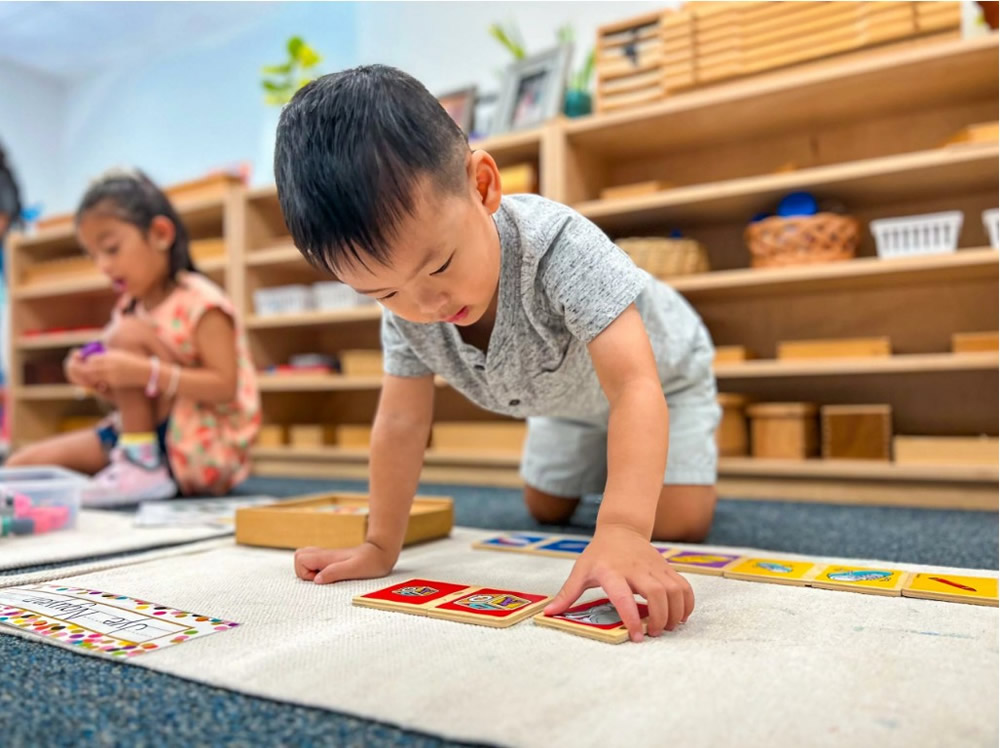
We believe children need opportunities to pick activities, move around, and care for themselves and their surroundings. A well-thought-out Montessori schedule for a 2-year old supports those opportunities by letting them try, repeat, and finish a task with adult help when needed.
In this guide, we’ll share a sample Montessori day for your 2-year old. We’ll also suggest easy adjustments for your family’s needs and show how the schedule reflects our own classroom routines.
Montessori Schedule for a 2-Year Old Table of Contents
- What Is a Montessori Toddler Schedule?
- Sample Montessori Schedule for a 2-Year Old
- How This Mirrors Lakewood’s Toddler 2 Day
- Making the Schedule Work at Home
- Frequently Asked Questions About Naps and Screens
- See Lakewood’s Toddler Routine in Person
- Key Takeaways
What Is a Montessori Toddler Schedule?
A Montessori schedule for a 2-year old helps your child know what to expect each day while giving them time to practice daily activities themselves. At home, that might mean getting dressed before breakfast, choosing an activity after a snack, or putting toys away before dinner. As these routines become familiar, your child can begin taking a more active role, whether that’s picking out a shirt or carrying a napkin to the table.
The schedule should also leave room for your child’s needs. Some mornings, they may want to repeat a favorite activity; other days, they may need an early nap or more time outside. Keeping an order while allowing for adjustments can help you build a routine that works for your family.
What Does “Work Time” Mean?
In Montessori, “work time” refers to purposeful activities that children engage in, such as matching pictures, completing a puzzle, washing a toy, or pouring water between containers. Adults demonstrate how to use the materials and stay nearby to help.
Sample Montessori Schedule for a 2-Year Old
Use this home schedule as a starting point. The times are examples, and work time can include several short activities, movement, and an adult’s help. Adjust meals, naps, and bedtime to your child’s needs and your family’s routine.
| Time | Part of the day | What it might look like at home |
| 7:00–7:30 a.m. | Wake and get ready | Diaper changing or toilet routine, wash hands, and help choose clothes. |
| 7:30–8:00 a.m. | Breakfast | Eat together when possible. Invite your child to carry a napkin or help wipe the table. |
| 8:00–8:30 a.m. | Outdoor play | Take a walk, play with a ball, or explore the yard together. |
| 8:30–9:00 a.m. | Books, songs, and self-care | Read, sing, and make time for diapering or toileting as needed. |
| 9:00–9:15 a.m. | Snack | Wash hands, sit down to eat, and help clear the snack space. |
| 9:15–10:05 a.m. | Hands-on work time | Offer a few familiar activities, such as a puzzle, picture matching, or supervised pouring. Allow movement and repetition. |
| 10:05–11:00 a.m. | Movement and play | Head outside again if conditions allow, or dance, build, and play indoors. |
| 11:00–11:30 a.m. | Lunch preparation | Wash hands and help with a small job, such as placing spoons on the table. |
| 11:30 a.m.–12:00 p.m. | Lunch | Eat, then help carry an unbreakable dish or wipe the table. |
| 12:00–12:30 p.m. | Prepare for rest | Diapering or toileting, a book, and a familiar settling routine. |
| 12:30–2:30 p.m. | Nap opportunity | Offer a calm sleep space. Actual sleep length will vary per child. |
| 2:30–3:00 p.m. | Wake and snack | Allow time to wake, wash hands, and eat. |
| 3:00–4:30 p.m. | Play and everyday activities | Combine outdoor time with pretend play, art, or helping with a household task. |
| 4:30–5:30 p.m. | Family time and dinner preparation | Play nearby with supervision or help with a suitable task while preparing dinner. |
| 5:30–6:00 p.m. | Dinner | Eat together and include your child in simple cleanup. |
| 6:00–7:00 p.m. | Calm play and bedtime preparations | Read, play quietly, and wash/change for bed. |
| 7:00–7:30 p.m. | Bedtime routine | Brush teeth, share a story, and say goodnight. |
Note: A child sleeping from 7:30 p.m. to 7 a.m., plus a two-hour nap, would get about 13½ hours of sleep. That falls within the AAP-endorsed recommendation of 11–14 hours per 24 hours for ages one to two.
How This Mirrors Lakewood’s Toddler 2 Day
Our published Toddler 2 daily schedule combines outdoor play, group activities, lessons, meals, and rest. The home example follows a similar order, with times shifted to suit a family morning.
| Part of the day | Lakewood’s Toddler 2 routine | Connection to the home example |
| Morning movement | Outside time, 8:00–8:30 a.m. | A walk or outdoor play after breakfast. |
| Hands-on learning | Montessori work and individual lessons, 9:15–10:05 a.m. | A morning block for choosing and practicing activities. |
| More outdoor play | Outside time, 10:20–10:50 a.m. | Another opportunity to move before lunch. |
| Lunch | 11:00–11:30 a.m. | A meal followed by cleanup and preparation for rest. |
| Rest | Nap time, 12:15–2:30 p.m. | An early-afternoon nap opportunity. |
| Afternoon | Books, songs, snacks, toy work, and outdoor time | A mix of play, movement, conversation, and familiar routines. |
Lakewood also includes handwashing and potty learning throughout the day. At home, respond to your child’s diapering or toileting needs in the moment rather than waiting for the next scheduled block.
Browse our class schedules to see how routines differ across classrooms.
Making the Schedule Work at Home
A useful Montessori schedule for a 2-year old must fit your family’s needs. To achieve this, start with your usual meal, nap, and bedtimes, and then fit play and other activities around them.
Keep a Few Parts Predictable
Begin with a reasonably consistent wake time, meals, nap opportunity, and bedtime routine. The AAP’s healthy sleep guidance encourages regular routines, including waking, meals, naps, and play. For transitions, describe what comes next in language your child can understand: “We’ll put the puzzle away, then wash our hands for lunch.”
Offer Manageable Choices
Set out age-appropriate activities and show your child how to use them. A low shelf or basket can make choosing and putting things away easier. Use materials suited to your child’s abilities, avoid choking hazards, and supervise activities involving water or tools. If an activity becomes frustrating, offer help or simplify it. For pouring practice, that could mean using less water or a lighter pitcher.
Leave Room for Ordinary Life
An appointment, a grocery trip, or a rainy morning will change the plan. Keep familiar parts of the day where possible and explain the change simply. Houston weather can also affect outdoor blocks; on days when conditions make outdoor play unsuitable, leave space for supervised indoor movement, such as dancing, rolling a ball, or following simple movement songs.
Frequently Asked Questions About Naps and Screens
How Long Should a 2-Year Old Nap?
Many 2-year olds take one afternoon nap, but not every child naps for the same amount of time. The AAP endorses the American Academy of Sleep Medicine’s recommendations that children ages 1–2 need 11–14 hours in 24 hours, including naps.
What If My Child Refuses To Nap?
Offer a calm rest period and keep the routine familiar. If your child doesn’t sleep, adjust the rest of the day to their needs rather than filling the nap block with activities. If you notice ongoing nap resistance, difficulty sleeping at night, or unusual daytime tiredness, talk to your pediatrician.
Where Does Screen Time Fit?
Screen time does not need its own slot in a Montessori home schedule. If your family uses it, choose a planned time and age-appropriate content, watch together if possible, and give a clear warning before it ends. The AAP’s media guidance encourages parents to consider the child, content, calming habits, and communication.
Should Screens Be Part of Bedtime?
Keep the bedtime routine focused on quiet activities, such as reading. The AAP recommends turning screens off at least one hour before bed and keeping devices out of bedrooms. Their Brush, Book, Bed routine also offers a simple sequence families can repeat every evening.
See Lakewood’s Toddler Routine in Person
Our Montessori toddler programs give children opportunities to practice language, self-care, movement, and hands-on learning within a familiar daily routine. For families with younger children, our infant programs introduce early movement, exploration, and communication.
To see how a school day could fit your child’s needs, please schedule a tour. We’ll walk you through everything, including how teachers will support your children through meals, activities, rest, and transitions.
Montessori Schedule for a 2-Year Old Key Takeaways
- A Montessori toddler schedule includes hands-on activities, movement, meals, rest, and everyday tasks.
- Use the home timetable as a flexible example and adjust it to your family.
- Work time can include several activities; a toddler doesn’t need to stay with one task for the whole block.
- Keep familiar routines while responding to hunger, tiredness, and care needs.
- Consider naps as part of total daily sleep, and keep screens from replacing sleep, play, and conversation.