
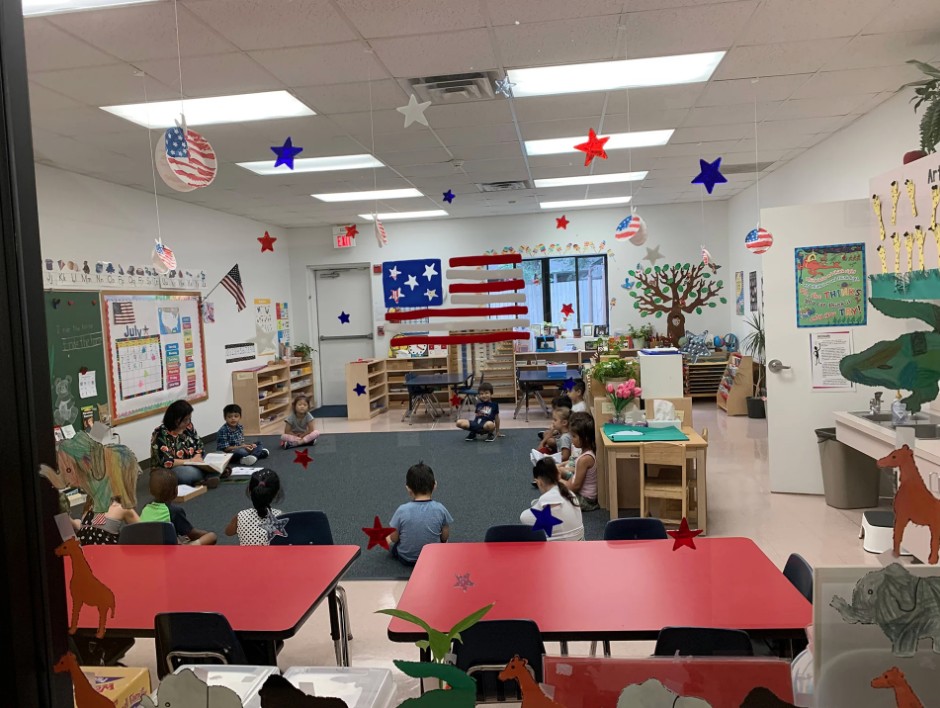
The first question new parents usually ask our staff and teachers is “What is a Montessori school?” They’ve heard from friends and family how instrumental the program has been in their own kids’ growth, but the theory behind Montessori and how it’s applied in the classroom often remains a blur. In this guide, we’ll clear everything up.
A Montessori school uses an educational approach developed by Dr. Maria Montessori in the early 1900s that combines hands-on learning, individual guidance, and opportunities for children to work independently. Children learn in a carefully prepared classroom, picking from activities and building skills at a pace that’s appropriate to their developmental stage.
But what does that look like during a typical school day? Below, we’ll explain how Montessori classrooms work, the teacher’s role, and what to look for when choosing a school for your child.
What Is a Montessori School? - Table of Contents
- Montessori Meaning: Where the Approach Begins
- What is a Montessori School Like Inside?
- What Does a Montessori Teacher Do?
- How Old Do Kids Have to Be to Attend a Montessori School?
- Six Questions to Ask on a Montessori School Tour
- Frequently Asked Questions
- See Montessori Learning at Lakewood
Montessori Meaning: Where the Approach Begins
Montessori is named after Maria Montessori, an Italian physician and educator who developed the method by observing children. Her approach recognizes that children can take an active role in learning when adults provide the appropriate materials, guidance, and room to practice.
In everyday terms, Montessori means giving children manageable opportunities to do things themselves. A child might learn to carry a tray, pour water, or put materials away before moving on to more complex activities. The classroom then supports their independence alongside the teacher, with accessible shelves, child-sized furniture, and organized learning materials.
You may also have heard about the absorbent mind, Montessori's term for how young children take in information from their surroundings during the first six years of life. Language, routines, and interactions with others all contribute to a child’s learning environment. That’s why our classrooms are designed to foster this natural process by giving them opportunities to explore, practice new skills, and learn from the people around them.
What is a Montessori School Like Inside?
During a classroom visit, you might see one child tracing a letter, another arranging counting materials, and two others working together on the floor. Several activities can happen at once because children receive different lessons and can practice what they are learning.
Mixed-Age Classrooms
A primary classroom, sometimes called a Children's House, often includes children ages three to six. Younger kids tend to observe older classmates, while older children have opportunities to help others and practice leadership. However, sharing a classroom does not mean every child receives the same lesson or works at the same level. If you’re looking at a Montessori school, ask how it groups children and supports different stages of development in each classroom.
Hands-On Learning Materials
Montessori materials give children a physical way to explore an idea before working with it abstractly. For example, children trace letters made from sandpaper while practicing the sounds letters represent, connecting shape, sound, and movement before studying each topic on its own. Similarly, in math, they might count and group beads to practice adding and subtracting.
The materials also follow a progression. Teachers introduce activities when children are ready, then give them time to practice. The American Montessori Society's early-childhood classroom guide illustrates several familiar materials and the skills they support.
A Prepared Environment
A “prepared environment” describes a classroom arranged to help children use the space with increasing independence. Materials have designated places, furniture fits the children, and work areas accommodate different activities. The American Montessori Society's guide shows more examples of these environments and explains what children learn by using them.
Time to Concentrate
Children need time to settle into an activity and figure things out, and Montessori classrooms give them that time through uninterrupted work periods. During these sessions, children choose activities, practice, repeat, and clean without frequent transitions. On a tour, your guide should explain how the school balances focused learning with meals, outdoor play, and rest.
What Does a Montessori Teacher Do?
A Montessori teacher observes children, introduces lessons, tracks their progress, and adjusts instruction accordingly. You may see the teacher demonstrating a material to one child or working with a small group while other children practice independently.
Child-directed learning also includes boundaries. Children learn to handle materials, respect another person's work, and care for shared spaces. Teachers set those expectations and help children who need support choose an activity or participate in the classroom.
The American Montessori Society explains the teacher's role as a combination of individualized instruction, observation, and preparation.
How Old Do Kids Have to Be to Attend a Montessori School?
Montessori education includes programs from infancy through adolescence, although individual schools offer different age levels. Early-childhood options generally include:
- Infants: Support movement, sensory exploration, communication, and responsive care
- Toddlers: Develop emerging language, coordination, self-care, and daily routines
- Preschool through 6: Offer practical life, sensorial, language, math, and cultural learning
- Kindergarten: The final year of the primary classroom's three-year sequence
Lakewood Montessori School offers infant, toddler, preschool, and kindergarten programs. Feel free to review our programs and reach out about current age requirements and class placement.
Six Questions to Ask on a Montessori School Tour
If you’ve decided to take the next step and tour a school, these questions can be helpful.
- What credentials do the teachers hold?
- Does their training match the age group they teach?
- How do younger and older classmates learn together?
- How long are uninterrupted work periods?
- How do teachers introduce lessons and track progress? Request an example of how they would support a child who needs more practice.
- How are classroom challenges handled? Ask about separation at drop-off, conflicts between children, and difficulty choosing work.
Teachers should also be able to describe the purpose of activities and how they respond to individual children. If they haven’t made that clear, ask them to walk you through an example of how they’d help your child learn something new.
Frequently Asked Questions
What is the Meaning of Montessori?
Montessori refers to the educational method developed by Maria Montessori. In a school setting, it describes an approach built around hands-on materials, individual development, prepared classrooms, and learning with guidance from trained adults.
Is Montessori the Same as Daycare?
Montessori describes an educational approach, while daycare generally describes a care arrangement. Some schools offer both because many parents need to balance the school’s teaching approach with practical needs such as hours, routines, communication, and classroom placement. Ask if your school offers extended daycare services if you need them.
Do Children Play in Montessori School?
Yes. Children explore, move, interact, and enjoy purposeful activities. Montessori educators often call classroom activities “work” to recognize the concentration and effort children bring to them. Read our article on Montessori play to learn more.
Does My Child Need to Be Independent Before Starting Montessori?
Children develop independence with support and practice. It takes time. On a tour, ask how teachers help new students learn routines, choose activities, and become comfortable in the classroom. And share your child's needs so the school can explain the support it can provide.
See Montessori Learning at Lakewood
If you're exploring schools near Lakewood Forest, Cypress, Spring, or Tomball, a visit can help you connect the Montessori approach to your child's daily experience. At Lakewood Montessori School, you can tour our classrooms, meet teachers, and ask us about the first weeks of school, classroom activities, kindergarten preparation, and anything else you want to know.
Schedule a tour to see Lakewood Montessori School in person.
What Is a Montessori School? - Key Takeaways
- Montessori combines hands-on learning, individual instruction, and opportunities to develop independence
- Mixed-age classrooms let children learn alongside peers at different stages
- Teachers introduce lessons, observe progress, and guide classroom expectations
- Programs serve different ages, so confirm the options available at each school
- Ask about teacher training and daily classroom practices